A common misconception in interior design is that all wood finishes in a room should match.
The floors should coordinate with the furniture, the furniture should coordinate with the cabinets, and everything should look like it came from the same collection.
Yikes, not here.
Some of my favorite designers, like Steven Gambrel, combine oak, walnut, cherry, maple, and other natural finishes. Looking at his work, you can tell he knows damn well how to layer a space! Haha, creating a space that feels visually appealing comes down to balance, undertones, and intention.
Here is how to mix wood tones without making your home look like a lumberyard.
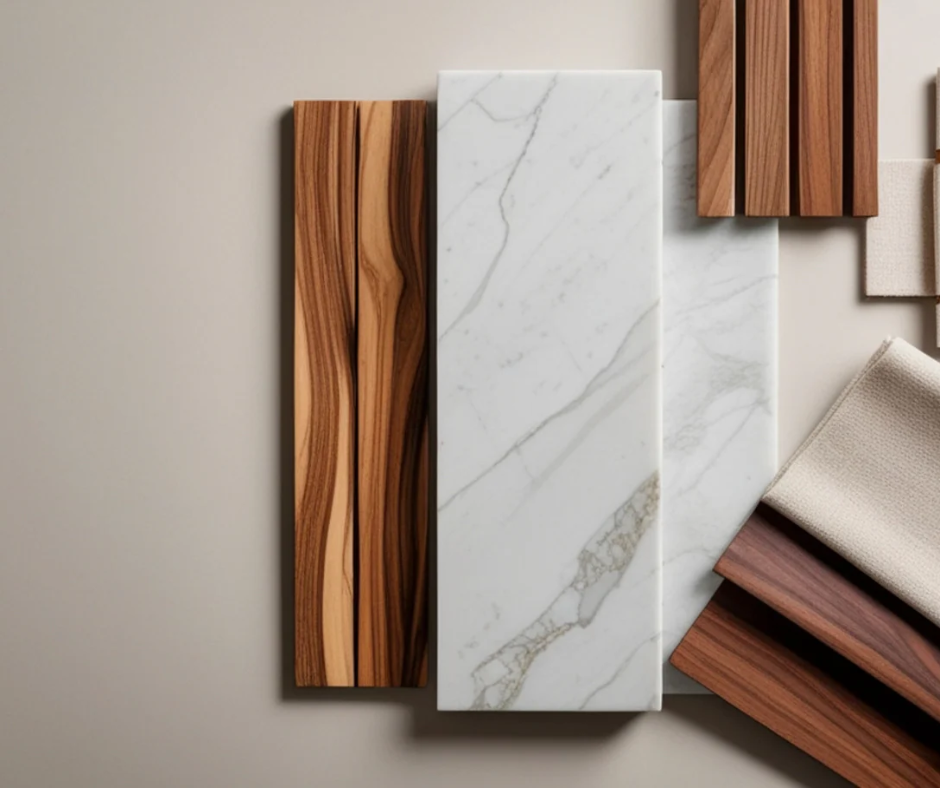
1. Start With Your Dominant Wood Tone
Before adding other finishes, figure out the wood tone with the strongest presence in the room.
This is usually your flooring, kitchen cabinetry, or a large architectural feature. Think of this as your foundation.
The goal is not to match every piece of wood…instead, use it as a starting point for figuring out your complementary tones.
If your floors are a warm natural oak, you might want to consider introducing a deeper walnut dining table or a lighter oak accent piece. This contrast will create a dimension without competing for attention.
The goal here is to establish a visual direction rather than to create a matching set.
2. Pay Attention to Undertones
This is where mixing wood finishes can get funkyy.
Wood tones usually lean warm, cool, or neutral. Two finishes may look completely different in color but still work great together because they share similar undertones.
Warm woods often have golden, reddish, or amber qualities. Cooler woods tend to have gray or slightly ashy undertones. Neutral finishes sit somewhere in between. A warm oak floor paired with a rich walnut table can feel cohesive because both have warmth, even though their depths are different.
Things can look odd when undertones clash without anything connecting them.
Mixing finishes adds character. The key is knowing how to make those differences feel deliberate.
3. Mix Light, Medium, and Dark Finishes
One of the simplest ways to create a layered interior is to vary the depth of your wood tones.
Imagine a room with light oak floors, a medium-toned wood console, and a dark walnut coffee table. Each finish has its own presence, but together they create visual interest. If everything is the same shade or dramatically different, the space can feel disconnected.
A good starting point is to work with two or three primary wood tones and repeat them throughout the room.
Repetition is what makes the combination feel intentional.
4. Give the Wood Some Breathing Room
Not every wood finish needs to sit directly beside another.
Sometimes the simplest way to make different tones work is to introduce materials that break them up.
Upholstery, rugs, stone, metal, and textiles can all create separation between competing wood finishes.
You can have a darker walnut table sitting on lighter oak floors without it looking like you couldn't make up your mind. The chairs and rug are what will help bring it all together. These materials give the eye somewhere else to land.
A room should feel layered, not like a collection of wood samples next to one another.
5. Don't Forget About Grain and Texture
Color isn't the only thing that matters.
The grain, texture, and finish of the wood can have just as much of an impact on the overall appearance of a room.
A heavily grained rustic wood table will create a very different effect from a smooth walnut cabinet, even if their colors are similar. Pay attention to whether your finishes are glossy, matte, distressed, natural, or heavily textured. Mixing different textures can add character, but too many competing patterns can make a room feel busy.
Sometimes the best combination is a simple wood floor, a deep-grained statement table, with understated cabinetry.
Let one or two pieces do the talking.
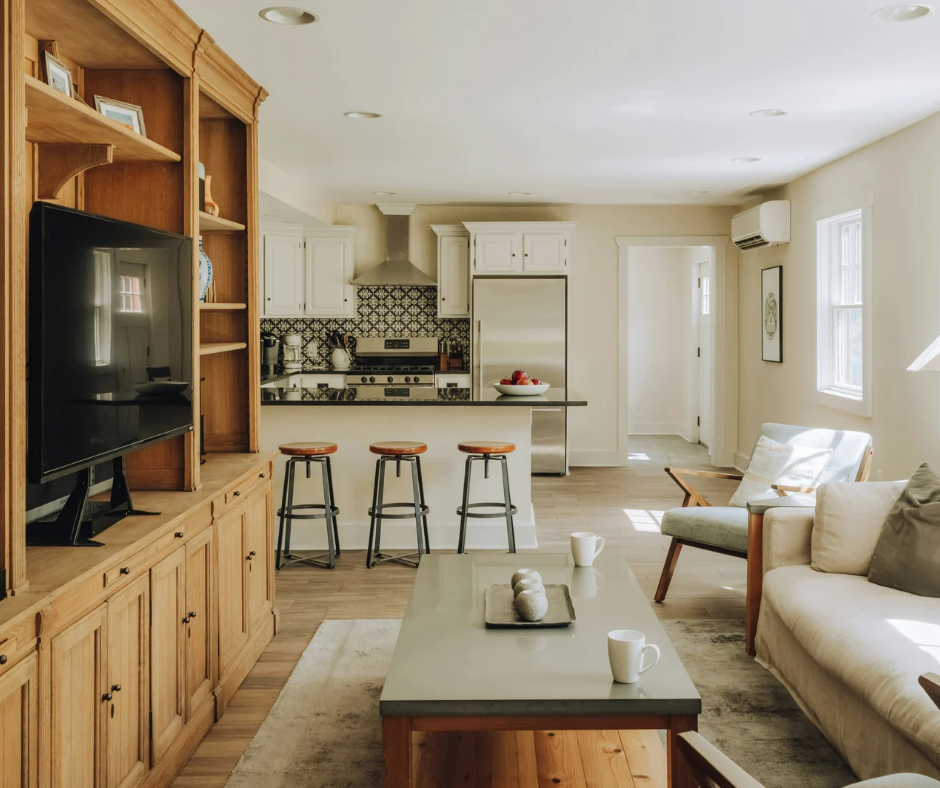
The Best Interiors Don't Match Everything
Different wood finishes bring warmth, character, and a sense of history into a space. They make a home feel collected rather than assembled.
Instead of asking whether two wood tones match, ask whether they complement one another. Check their undertones, consider their proportions, and see how they relate to the other materials in the room.
Every home has its own story, and sometimes it just needs a little direction.
If you're ready to make changes or have a design question of your own, I'd love to help.
Reach out anytime.
